

This post may contain affiliate links, which means I may earn a small commission if you choose to purchase through them — at no extra cost to you. I only share things I genuinely love or would use myself.
Going from a strict 9-to-5 corporate schedule to having all the time in the world in front of you sounds like a dream come true. At least, that’s what I thought. But when I found myself in my first month of unemployment, reality hit me hard: I felt completely lost.
For years, my life was dictated by alarms, calendar meetings, urgent deadlines, and bosses. Suddenly, all that structure vanished. I had an endless list of things I wanted to do and many others I needed to do, but my brain simply didn’t know where to start. If you’re also wondering how to organize your week without a routine, you’re not alone — and there is a way out.
Today, I want to tell you how I got out of that loop, how to organize your week without a routine when you’ve lost the structure of corporate life, and the tools that saved my mental health.


2022


The Culture Shock of Losing the Corporate Routine
The first mistake I made when I became unemployed was trying to replicate the exact rigidity of the office at home. I would set strict alarms and fill a piece of paper with twenty giant tasks. Spoiler alert: it didn’t work.
Scattered minds do not function well under self-imposed, monotonous pressure. When you are in an office, the environment forces you to focus (or at least pretend to). But when you are alone at home, freedom can become your worst enemy if you don’t have an anchor system. Start with something small and grounding, like making yourself a real breakfast — these 10-minute oat banana pancakes are my go-to.
I realized I didn’t need “military discipline”; what I needed was a daily and weekly reset. A visual space to braindump everything so my mind could stop spinning.
The 3-Step Method to Organize Your Week Without a Routine
After a lot of trial, error, and abandoned notebooks, I understood that the key to organization for creative or scattered people is not to plan every minute of the day, but to create “blocks of intention.”
Here is the system that brought back my peace of mind:
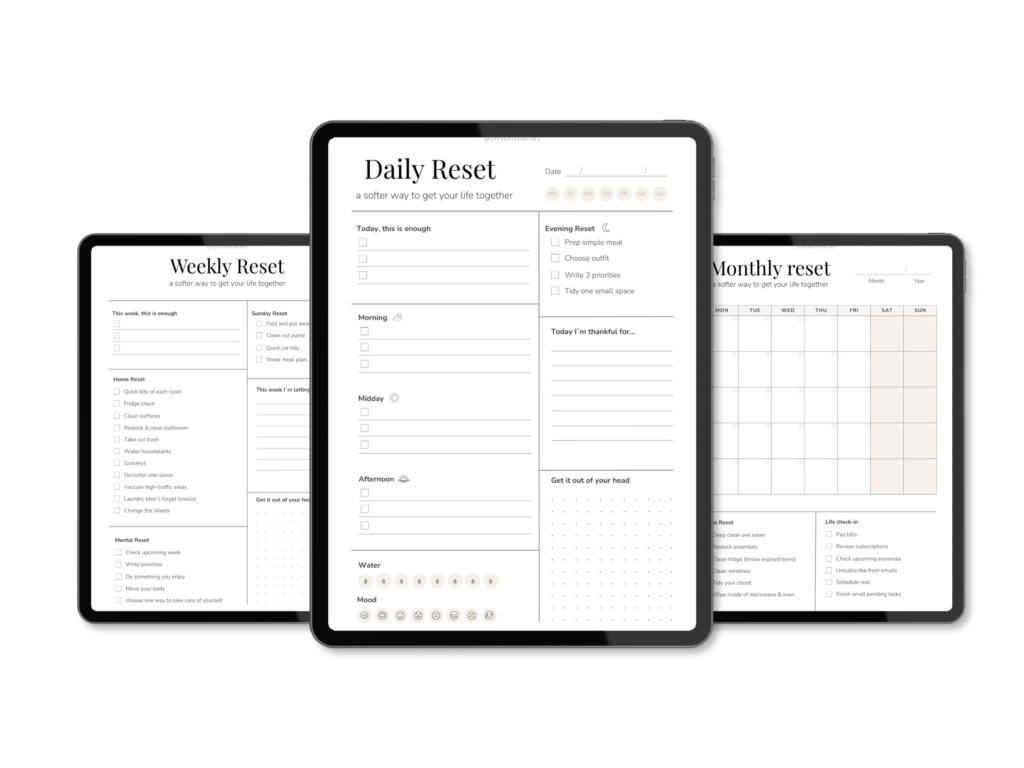
1. The Monthly Reset: The Compass
You cannot plan a Tuesday if you don’t know where you are going for the month. The first step is to do a brain dump once a month.
- What are my 3 big goals? (Looking for a job, launching a project, improving health).
- What events or deadlines do I have?
- What habits do I want to maintain?
Having this in sight prevents you from feeling lost and reminds you of the “why” behind what you do every day.
2. The Weekly Focus: Your Road Map
This is where most of us fail. On Sunday afternoon or Monday morning, it is vital to sit down and look at the full week. But be careful, do not fill the days with endless tasks.
Assign a theme or a main objective to the week and distribute heavy tasks realistically. If you know your energy dips on Wednesdays, don’t schedule your hardest task for that day. Flexibility is the key to preventing a scattered mind from giving up on planning.
3. The Daily Anchor: Step-by-Step
The day-to-day should be simple. I apply the 3 key tasks rule. If I manage to do those three things, the day is a success. Everything else is a bonus. I also always include a space for self-care and to track how I am feeling, because productivity without well-being is useless.
The Tool I Had to Create for Myself
I tried using hyper-complex digital apps, phone calendars, and traditional “one page per day” planners. Nothing worked for me because they were either too rigid or required too much attention, and I would end up forgetting them.
I needed something visual, aesthetic, and functional that would allow me to see the big picture and wouldn’t make me feel guilty if I skipped a day.
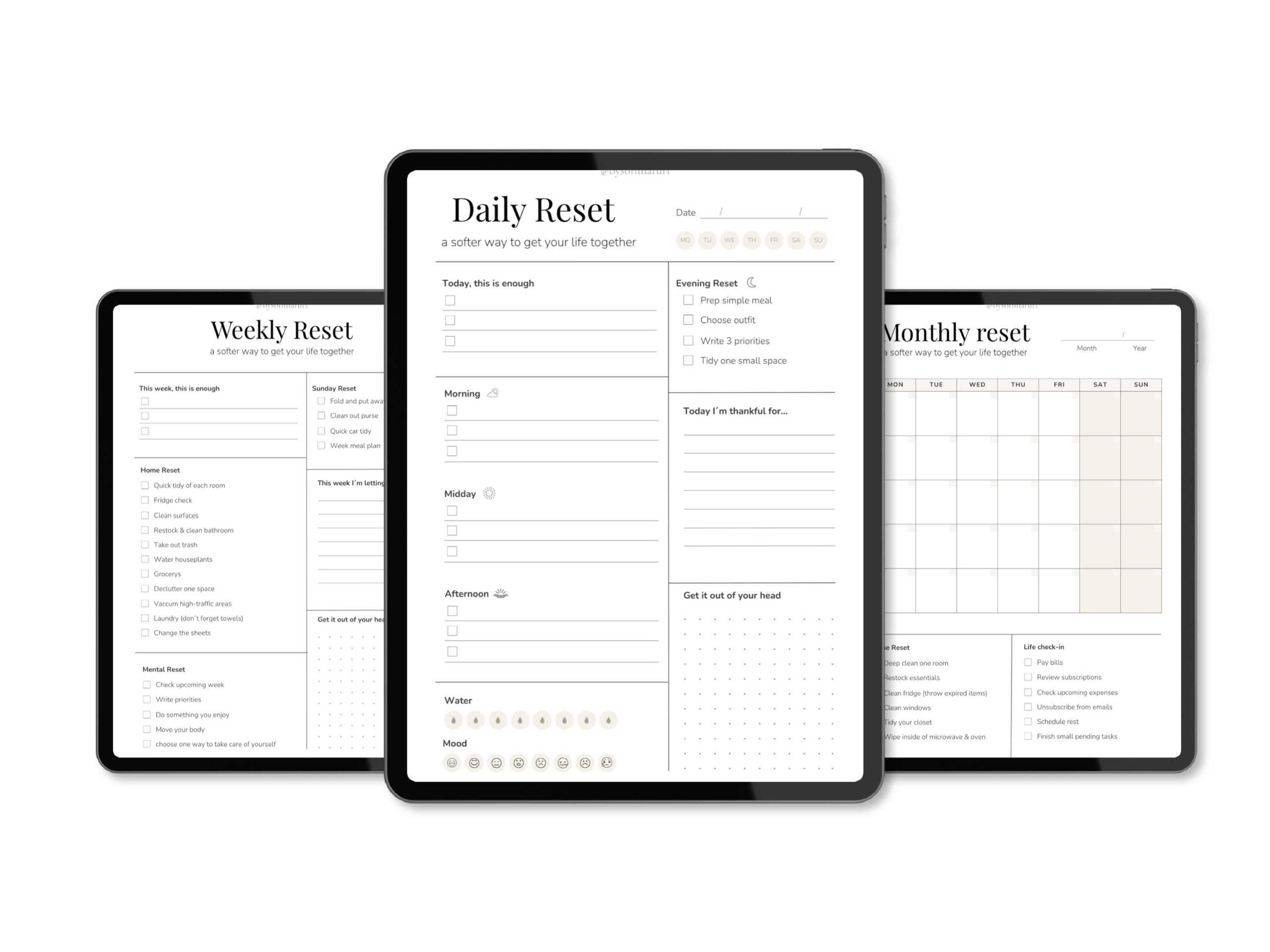
Since I couldn’t find it, I decided to design my own system. I created a daily, weekly, and monthly reset planner pack designed specifically for scattered minds like mine, looking for a bit of order without losing their freedom. They are minimalist and functional templates that you can print or use digitally.
They changed my life and helped me transform that chaotic month of unemployment into a period of great clarity and beautiful projects. If you feel like you are on that same roller coaster and need to ground your thoughts, [you can check them out here in my Etsy shop].
Final Tips: How to Organize Your Week Without Losing Your Mind
If you are going through a job transition or simply feel like your head is going a thousand miles an hour, remember this:
- Be kind to yourself: There will be days when you accomplish nothing you planned. It’s okay; tomorrow is a fresh start. On those tougher days, give yourself permission to step away — here are 20 screen-free things to do when you need to reconnect.
- Choose the visual option: For scattered minds, out of sight, out of mind. Keep your planners where you can see them constantly.
- Celebrate small wins: Did you manage to make that phone call you were putting off? Write it down and cross it off. The brain loves the dopamine of seeing completed tasks. Pour yourself a quiet ritual to celebrate the day — like this chamomile latte that replaced my evening coffee.
Getting organized is not about becoming a robot; it is about creating the mental space necessary for your ideas to shine without causing you anxiety.
Let’s navigate the chaos together.
Transitioning to a new routine is hard, but you don’t have to do it alone. If you are ready to give your scattered mind a soft place to land, check out my printable and digital planners on Etsy. They were made by a scattered mind, for scattered minds.
Leave a Reply